Posts

Extinction Alarmists or True Species Loss?

Image
Species extinction rates often overestimate actual rates of extinction. Why is that and what causes changes in these rates in the first place?  Species extinctions, whether it be the extinction of plants or animals, are measured by extinction rates. An extinction rate represents the number of species that go extinct over a period of time. It is often easier to break down a seemingly abstract rate, like a species extinction rate, down into a digestible number. Statistics like “[e]very day, up to 150 species are lost” make it easy to visualize the loss of organisms (Djoghlaf et al. 1). However, it has been found that generalizations like this can be very inaccurate and don’t accurately represent the actual extinction rate of plants or animals. How are extinction rates usually measured? Extinction rates are often measured through some sort of model. By using a set of circumstances and data, an understanding of the number of species going extinct at a given time can be built.  One...

Pyrodiversity- What is it, and is it Really Helpful?

Image
Pyrodiversity is said to "beget biodiversity", but to what extent is that true?                                                                                                                           Image of a wildfire from  Public Domain Pictures What is Pyrodiversity?   Wildfires exist in a peculiar gray area in society's collective consciousness. People often fear wildfires because they are frequently associated with danger due to their destructive nature. On the flip side, people are also aware of wildfires' benefits for humanity, creating a duality of fires being helpful but harmful. Frequent wildfires help hum...

Can the Microbial Impact of Biochar Promote Biodiversity in Agroecosystems?

Image
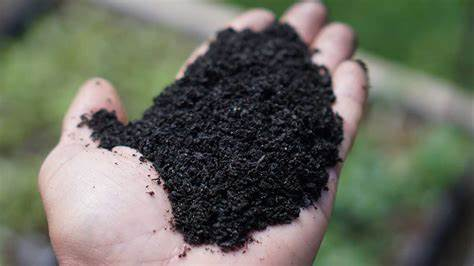
               Agroecosystems are a major topic of concern when it comes to promoting biodiversity around the world, especially because agricultural land takes up around half of the world’s total land area. As agricultural land has expanded, it has become increasingly based in large-scale monocultures, or fields that consist of one species of crop, which has led to a decline in biodiversity. It is in our best interest to increase biodiversity because it allows for the protection of species that we highly depend on from threats such as pests and climate change. As work is being done to make agriculture more sustainable, we must question how the variety in biota plays a role in our practices and how our practices impact these organisms and their communities as a whole.  One particular practice that is gaining more attention is the application of biochar, a soil amendment that is typically produced from the pyrolization of organic waste. Bi...

Saba

Image
Saba: The Not So Little Island Crystal Millar November 2, 2022

Microalgae is the future of sustainable agriculture!

Image
Maya Blanchard 27 Oct 2022 Major changes need to be made in our food production system if we want to provide adequate nutritional support for our expanding population while also improving environmental sustainability. Scientists believe that microscopic algae might be the key to an agriculturally sustainable future. Our current food system is unsustainable Farming has been the provider of humanity’s nutritional needs since the agricultural revolution, but it is rapidly becoming an unreliable source. To keep up with a population approaching 10 billion, global food production will need to increase by more than 50% in the next 25 years. Is this an attainable goal in our current system? Terrestrial agriculture is a huge resource guzzler, and its negative impacts on climate, land use, and biodiversity make closing this gap impossible. Some might suggest turning to aquatic food sources, but wild capture fisheries are already massively overexploited. Scientists and agriculturalists must thin...

Mobula Rays need more MPAs (and so does all marine life!)

Image
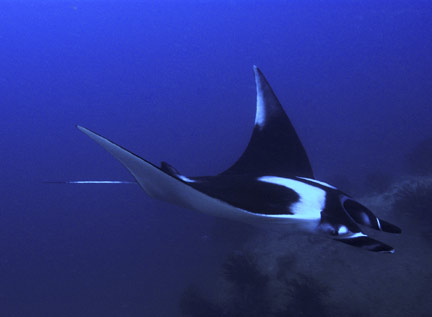
                It is a scuba diver’s dream to float beside the breathtaking wingspan of a Mobula ray as it soars through the water column like a bird in zero gravity flight. Mobula are known for flying underwater and above, making leaps up to 2 meters into the air and landing with a smack that echoes across the ocean surface. There are eleven major species of Mobulidae throughout the world. The Mobula thurstoni, also known as the bentfin devil ray, is one of the most widely distributed yet poorly documented Mobula species. Recent identification of individual bentfin devil rays in the Fernando de Noronha Archipelago in Brazil has the potential to strongly defend the importance of Marine Protected Areas worldwide. The Fernando de Noronha Archipelago (FNA) is a UNESCO heritage site. It has notably high biodiversity with a large zooplankton biomass and essential habitats for various species of fish, turtles and marine mammals.  The M...

Extinction of Chondrichthyes

Image
  The extinction of species is most often brought up when discussing climate change and the state of our environment. Human activity has caused so many extinctions that we are now in the world’s sixth mass extinction. The extinction of species can be caused by a variety of factors and can occur in many different places. However, this post focuses on the extinction of chondrichthyes in the world’s oceans.  The abundance of many different chondrichthyes are not well documented, so many more chondrichthyes could be threatened without our knowledge. The class chondrichthyes includes sharks, rays, and chimeras. The knowledge on the extinction rate of many species in this class is data deficient which means that there is not enough information to determine the true status of these animals.  There are regulations on how much these animals can be fished, and protections have been put in place. Still though, these different protections are very limited and varied. This study looke...